


Lost Words & Olde Spellings…
✤

Curious language from inscriptions past
Old inscriptions are full of words and spellings that are beautiful, peculiar and sometimes surprisingly playful.
—❦—
Here are a few worth borrowing.

Words for a life together
Concord, Grace and Health.
The tradition of these words reaches far back in time.
A gold engagement ring found at Dura-Europos and dating to around the third century AD carries the word OMONOIA — Concord · harmony · being of one mind
OMONOIA appears regularly on Byzantine marriage rings.
Sometimes it forms part of a longer inscription. On other surviving examples, the word itself becomes a prominent part of the ring's decoration.
It is a particularly fitting word for a wedding ring: not simply love, but two people in accord.
—❦—
◈ ΧΑΡΙE (Translates to Greek, CHARIS)
Grace favour goodwill
ΧΑΡΙE also appears on Byzantine marriage jewellery, including in the inscription ΘΕΟΥ ΧΑΡΙΣ — Grace of God.
The word carries several related meanings: grace, favour, kindness and goodwill.
Outside the longer religious inscription, grace also has a quiet relevance between two people — generosity, kindness and room for one another.
—❦—
◈ ΥΓΙΑ (Sometimes spelled HYGIA)
Health · soundness · well-being
Perhaps the simplest of the three.
Alongside concord and grace, it is a very practical wish: may you be well.
ΟΜΟΝΟΙΑ ◈ ΧΑΡΙΣ ◈ ΥΓΙΑ
Concord Grace Health
—❦—
Together, the three form a small vocabulary for a life shared with another person.
Their lettering, spacing and repetition lend themselves particularly well to engraving, and there are many ways they might be divided into panels, worked around a band, or combined with small stones and ornament.
They are old words, but there is plenty of room to do something new with them.

Words lost to time
Thine
◈ Yours, (Thine evermore) — yours forever
Lief
Dear ◈ Beloved, (Thou art my lief)
Weal
Wellbeing ◈ Prosperity, (In weal and woe) - In good times and bad
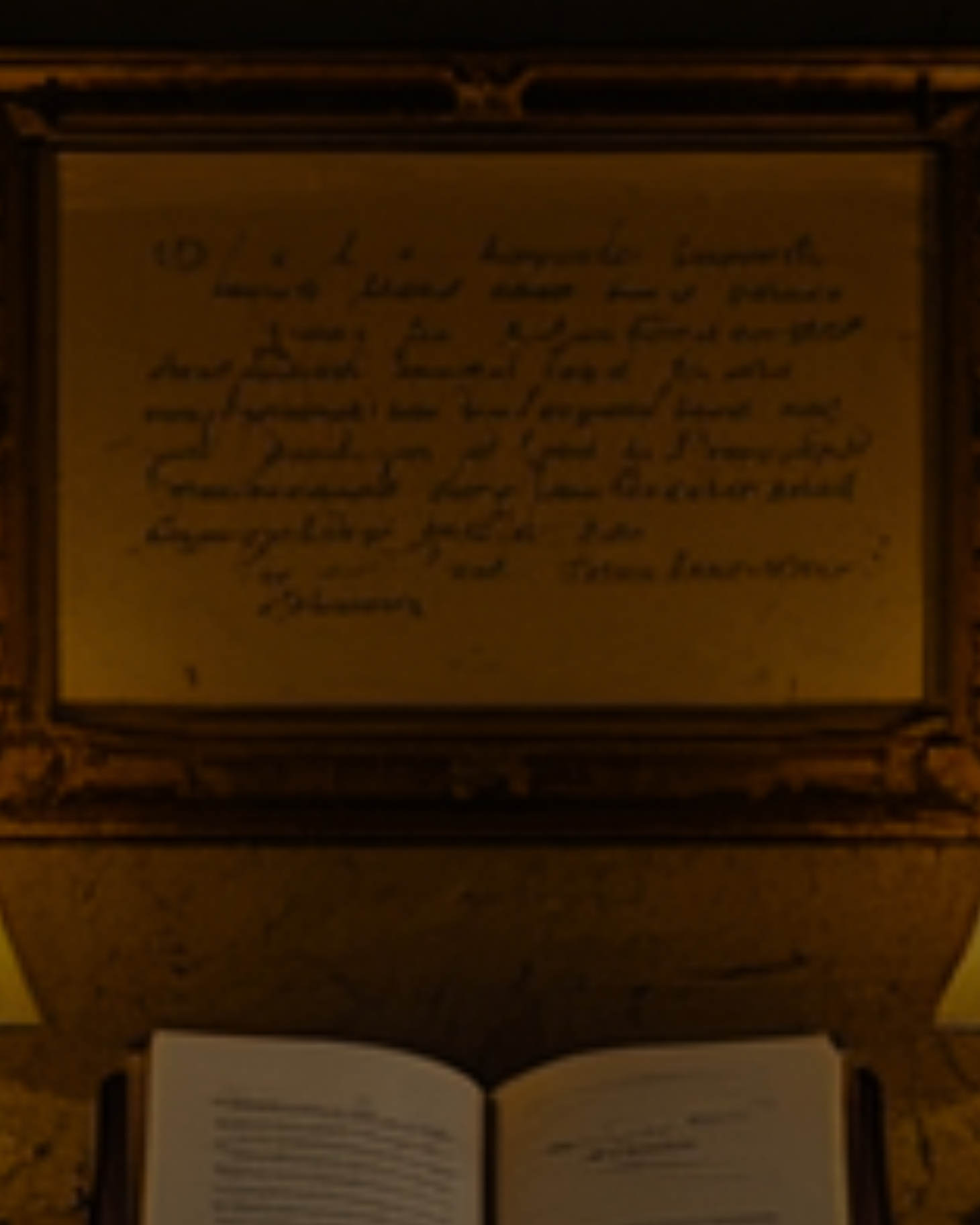
Olde Spellings
◈ Herte ◈ Trewe
◈ Lyke ◈ Choyce ◈ Swete

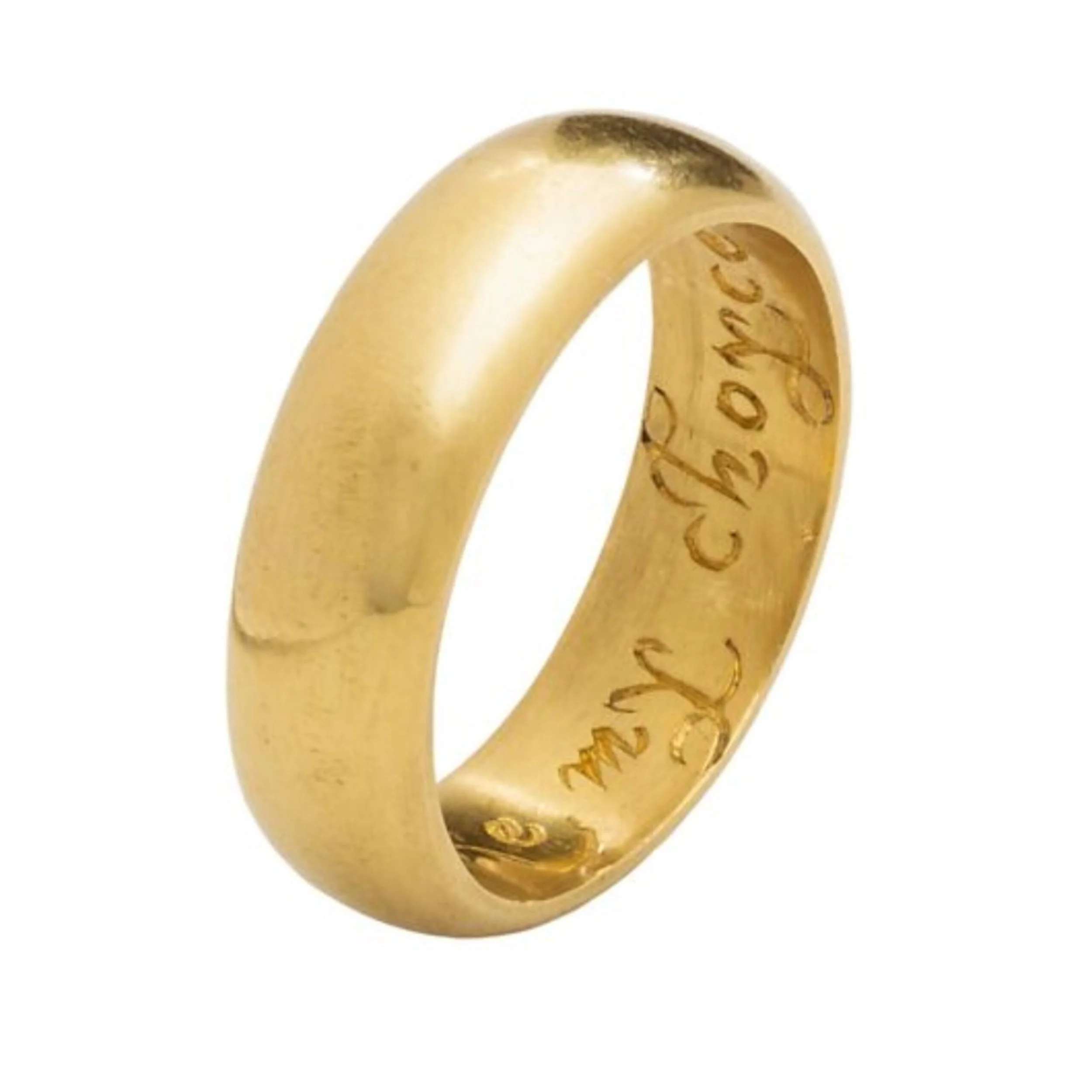
Words found on surviving historical rings:
✤CHOYCE —
“I love and like my choyce”
surviving c.1650–1700 ring.
✤CHOYCE / DOE / REIOYCE —
“In thee my choyce I doe reioyce”
surviving post-medieval ring in the London Museum.
✤HARTES / PARTES —
“United hartes death only partes”
surviving 18th-century ring.
✤MI / CHOYSE —
“I like mi choyse”
recorded historical posy form.
✤THE / MEE —
“I give it thee to think on mee”
recorded posy inscription.
✤REJOYCE / THE —
“I rejoyce in the my choice”
recorded historical inscription
✤DEVlDE —
“In love abide till death devide”
recorded posy inscription.
✤HARTES / JOYND —
“Two hartes joynd in one” —
recorded surviving post-medieval ring.

Borrow something from the past
Not all old words and spellings need stay in the past. A historical phrase can be carried as it was, or let an older spelling bring a little character and playfulness to words of your own.
I can help find a lettering style that suits both the words and the piece they are to be engraved upon.
Enquire about an inscription, or style ⇒
⇐ Return to The Inscription Library
—❦—